In this article
Solar lithium battery lifespan depends on both cycling and time, together with temperature, operating limits and the capacity your application still needs. A cycle count cannot establish a universal replacement year, and a warranty period is not a prediction of remaining service life.
For a useful answer to “how long will a lithium battery last?”, ask for the exact model’s cycle-test conditions, remaining-capacity endpoint and warranty terms. Then compare those conditions with the proposed installation and operating schedule. This guide shows how to make that comparison without treating a laboratory rating as a site guarantee.
Separate service life, cycle life and warranty
| Term | What it describes | What to verify |
|---|---|---|
| Cycle life | Charge/discharge cycles completed under defined test conditions | Discharge depth, current rate, temperature and remaining-capacity threshold |
| Calendar ageing | Changes as time passes, including periods without cycling | Storage conditions, operating temperature and state of charge |
| Service life | How long the installed battery remains suitable for its application | Required backup duration, power capability, condition and service support |
| Warranty | The supplier’s written coverage and remedies | Time or throughput limits, exclusions, retention condition and claim process |
The DOE Energy Storage Handbook chapter on lithium-ion batteries distinguishes ageing associated with time from ageing associated with cycling. It identifies operating conditions as important to lifetime. This explains why two installations using the same cell chemistry can have different outcomes.
A capacity endpoint is also a defined test or commercial threshold. Reaching it does not automatically mean that the battery has become electrically unusable. Continued operation depends on condition, manufacturer guidance and the application’s requirements.
Read the conditions behind the cycle number
Compare cycle claims only after checking what was tested. A cell result is not automatically a complete-pack result. A result at one discharge depth is not interchangeable with a result at another depth. Ask whether the quoted temperature refers to ambient conditions or the measured battery temperature.
As a concrete example, Victron’s Lithium Smart technical data specifies a remaining capacity of at least 80% of nominal and lists 2,500 cycles at 80% depth of discharge, 3,000 at 70%, and 5,000 at 50%. These are specifications for that named product family, not CHANGYUAN ratings. Their value here is the reporting format: a cycle number accompanied by a depth and an endpoint.
Why dividing cycles by 365 is only a screening calculation
Suppose a hypothetical battery is rated for 4,000 cycles under a particular test protocol. If the application repeated that same discharge-and-recharge duty once per day, simple arithmetic would give 4,000 ÷ 365 = 10.96 years. At twice per day, the result would be 4,000 ÷ 730 = 5.48 years.
These are arithmetic illustrations, not life predictions. They exclude calendar ageing, changing temperatures, rest periods, evolving capacity and differences between a test cycle and actual operation. The 4,000-cycle assumption is not a CHANGYUAN specification.
Partial discharge events complicate the comparison further. Equivalent full cycles can be used to describe throughput, but an equivalent full-cycle count is not automatically identical to a manufacturer’s test-cycle count. Use the definition supplied with the monitoring system and warranty.
Temperature limits are not lifetime guarantees
Review charge, discharge and storage temperatures separately. A permitted temperature range describes an operating boundary; it does not prove equal lifetime at every point within that range. Use the model instructions for location, ventilation, clearances and any heating or cooling requirements.
A 2025 study of large-format stationary-storage LFP cells investigated both calendar and cycling degradation and found temperature to be a major ageing driver under its tested conditions. Its measured results should not be converted into a fixed degradation rate for an unrelated battery pack.
CHANGYUAN model example: keep the data boundaries clear
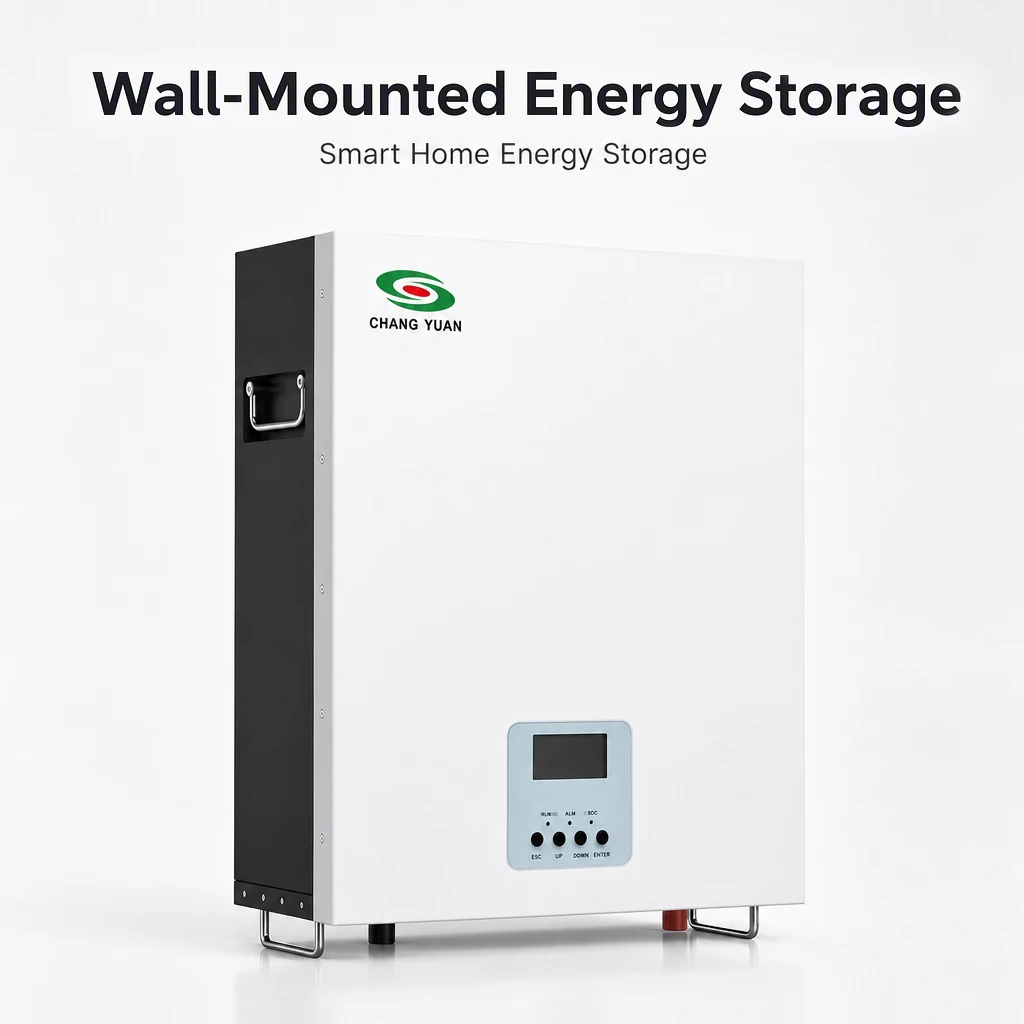
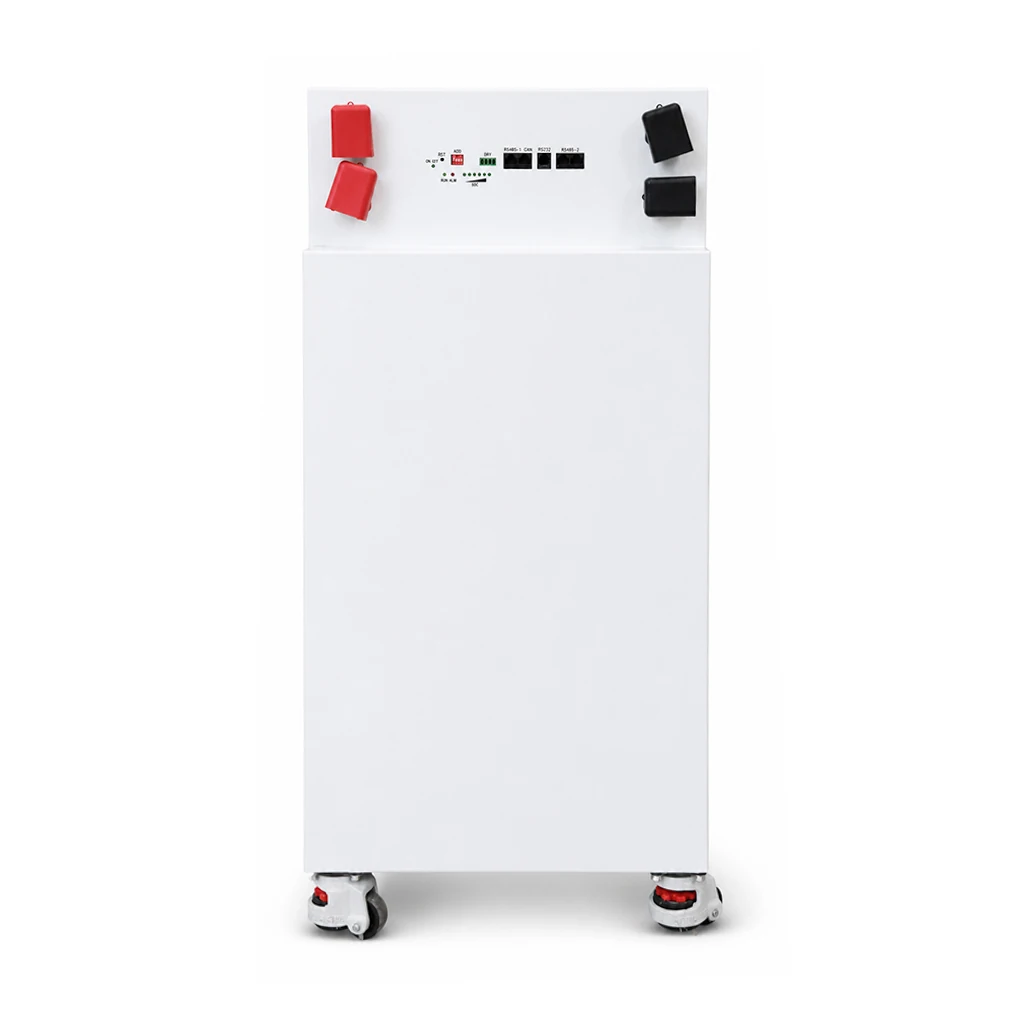
The published CYJC-16314Z floor-standing battery configuration lists the following values, checked on November 26, 2026:
| Parameter | Published value | Interpretation |
|---|---|---|
| Rated energy | 16.08kWh | Nominal energy, not a retained-capacity warranty |
| Rated voltage and capacity | 51.2V DC; 314Ah | Electrical configuration for this named model |
| Rated charge/discharge power | 10kW | Battery-side rating; paired inverter output is a separate check |
| Charging temperature | 0 to +55°C | Published charging boundary, not a lifetime test condition |
| Discharging temperature | −20 to +55°C | Published discharging boundary, not permission to charge below 0°C |
The product page does not establish a complete cycle-test protocol or a model-specific retention warranty. Request those documents for the ordered version. Do not infer them from the LFP chemistry, the temperature range or another supplier’s literature.
Allow for capacity retention in the energy budget
Begin with the energy the application must receive at the planning horizon. For illustration, a 10.24kWh battery at an assumed 80% retained nominal capacity would hold 8.192kWh on that basis. If the example also assumes a 90% usable discharge fraction and 92% conversion efficiency, estimated delivered AC energy is:
10.24 × 0.80 × 0.90 × 0.92 = 6.78kWh, rounded.
All three percentages are hypothetical planning assumptions. They are not CHANGYUAN product or warranty values, and the calculation is not a degradation forecast. Auxiliary consumption, temperature effects, power limits and the actual supplier definitions must be addressed separately. Do not apply a discharge allowance twice if a quoted capacity is already usable.
For a new purchase, use our LiFePO4 solar battery selection guide alongside the kW, kWh and duration guide. The lifetime question and the initial sizing question need consistent assumptions.
Request a written lifetime and warranty checklist
- Identify the exact pack model, cell configuration and supplied document revision.
- Request the test discharge depth, temperature, current rate, rest periods and capacity endpoint.
- Check whether the evidence covers cells, modules or the complete battery system.
- Read the warranty duration, throughput conditions, capacity-retention measurement and exclusions.
- Confirm compatible inverter models, required firmware and commissioning records.
- Agree what monitoring records and service steps are needed if performance changes.
After commissioning, retain the original settings and baseline records. When backup time falls, first compare the loads, reserve settings, temperature and inverter alarms with that baseline. A shorter runtime alone does not prove permanent capacity loss or establish the need for replacement.
Frequently asked questions
Does a ten-year warranty mean ten years of unchanged capacity?
No. Read the written retention condition, coverage and measurement method. This question is an example of how to interpret a warranty; it is not a statement that a particular CHANGYUAN product carries ten-year coverage.
Does a battery age if it is rarely used?
Yes. Calendar ageing can occur while a battery is not cycling. Follow the selected model’s storage state-of-charge, inspection and charging instructions instead of assuming unused capacity remains unchanged.
Should I replace a battery as soon as it reaches 80% capacity?
Not solely because of that number. Determine whether it still meets the application’s energy and power requirements, and follow the manufacturer’s condition assessment and service guidance. A test endpoint and a replacement decision serve different purposes.
Discuss a documented storage configuration
Share your expected daily cycling, backup requirement, installation temperatures and existing inverter with CHANGYUAN. Request model-specific operating documents and warranty terms so the capacity plan and lifetime assumptions can be reviewed together.
Discuss your application.
Share your equipment scope, electrical supply and operating priorities.
Prepare an enquiry